Overview
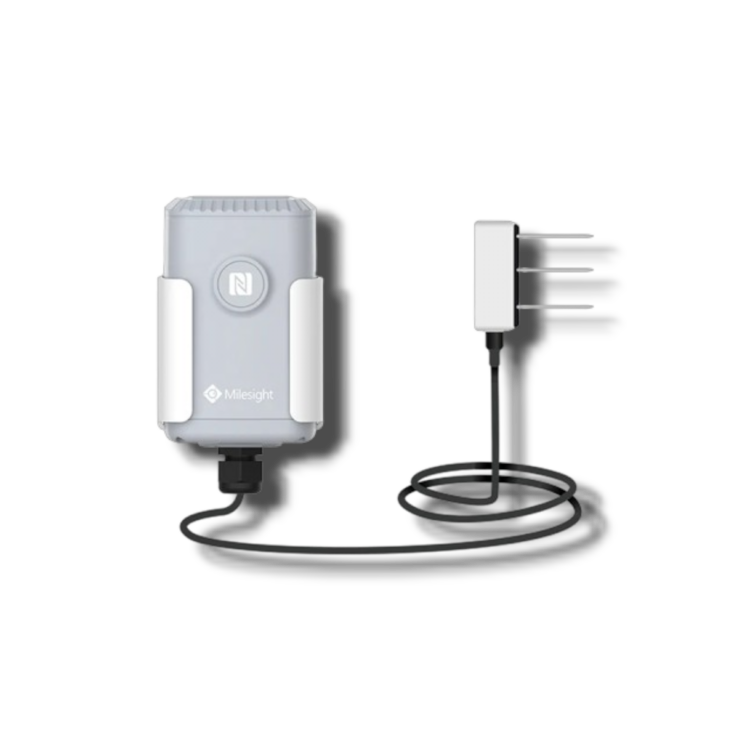
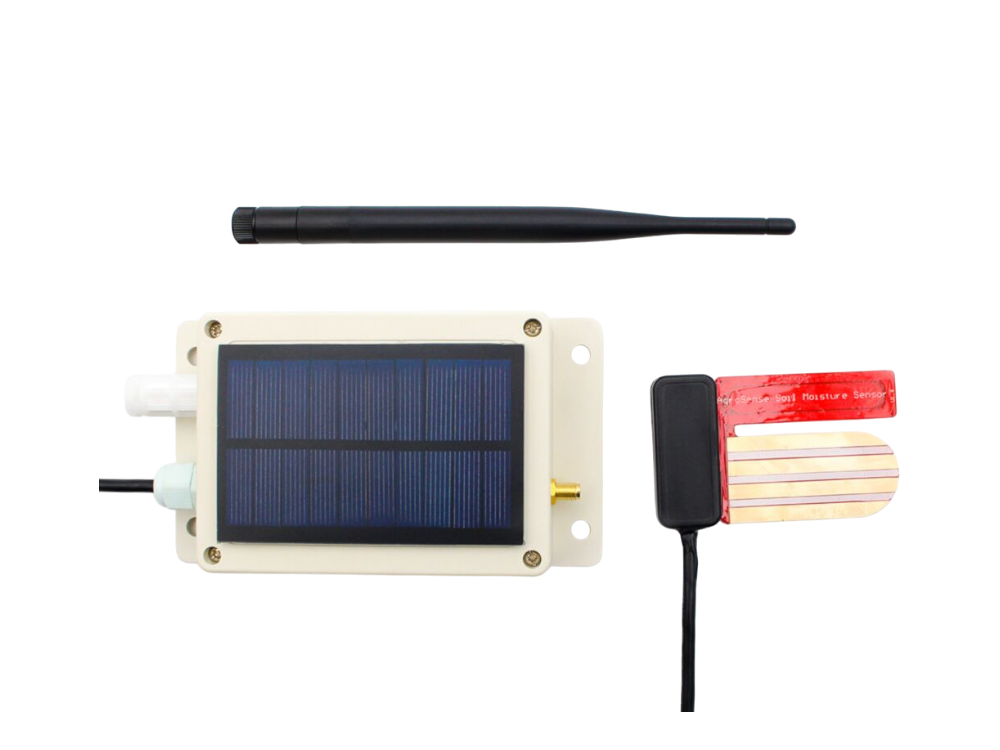
AgroSense_Soil & Air EC-TH Pro LoRaWAN is a rugged, solar-assisted environmental sensor package designed for remote agricultural, horticultural and field-research deployments. It combines a four-electrode soil EC probe, soil temperature and moisture sensing, plus an integrated air temperature & humidity sensor in a weatherproof, low-power LoRaWAN node — packaged to minimize site visits and deliver continuous, field-grade telemetry for irrigation control, salinity monitoring, fertigation insights and long-term agronomic research. Makerfabs
Sensors & measurement fidelity
-
Soil EC (electrical conductivity): four-electrode (four-pole) design for high stability and low influence from electrode polarization and fouling; measurement range 0–20,000 µS/cm with 1 µS/cm resolution.
-
Soil temperature & moisture: wide ranges (soil temp to ~–40 °C…+80 °C) with high resolution for accurate root-zone profiling.
-
Air temperature & relative humidity: rated to –40 °C…+85 °C, ±0.3 °C (air temp) and ±2% RH (air humidity) accuracy with fine resolution.
These core sensing specs and the four-electrode EC approach are explicitly documented by the manufacturer for reliable long-term field deployments.
Connectivity & network behaviour
The device is a LoRaWAN® node (standard LoRaWAN v1.0.3) using OTAA, Class A operation by default, with support for common regional bands (EU868 / US915). Makerfabs documents typical ranges of ≥2 km urban and ≈5 km line-of-sight.
Power, enclosure & endurance
The unit is built for low power field life: it ships with 2 × 18650 Li-ion battery capacity and a 5 V / 1 W solar charging option inside an IP67 (manufacturer also references IP68 in some notes) solar-powered housing for long autonomous operation. Makerfabs highlights the device’s ultra-low-power design and claims multi-year field operation in low-duty deployments, while also supporting replaceable batteries in variants that list ~1 year battery lifetime depending on configuration and reporting intervals. The enclosure and component selection are rated for extreme temperatures and UV exposure appropriate to outdoor agriculture. Makerfabs
Data handling, resilience & integration
-
Local data buffering stores readings during network outages so no short outages cause data loss.
-
Configurable uplink intervals and support for downlink reconfiguration let you tune the tradeoff between timeliness and battery life.
Mechanical & deployment notes
Compact (≈115 × 85 × 35 mm), wall-mountable design with a solar face and probe mounting options makes retrofitting straightforward. Operating temperature and protection class are optimized for year-round outdoor field use, and the product comes with quick-start guides, datasheets and a GitHub usage repo to accelerate integration into gateways and platforms.
Typical use cases
Soil salinity mapping and trend detection (greenhouses, open fields); irrigation scheduling and water-use optimization; fertigation monitoring; research trials where synchronized air + soil profiling is needed; and distributed sensor networks for precision agriculture where low power and long range are essential.